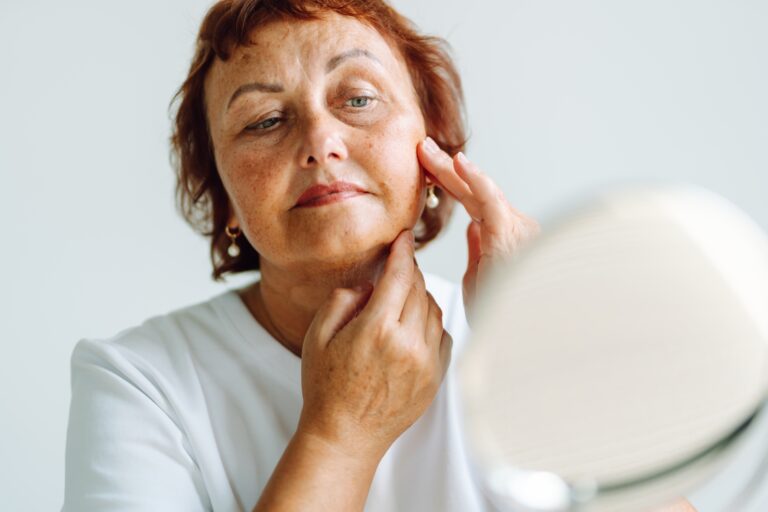
Although all three treatments are usually performed with hyaluronic acid, each has a different goal. The product and technique should be tailored to the lips’ anatomy, proportions, and mobility.[1,2]
Lip hydration
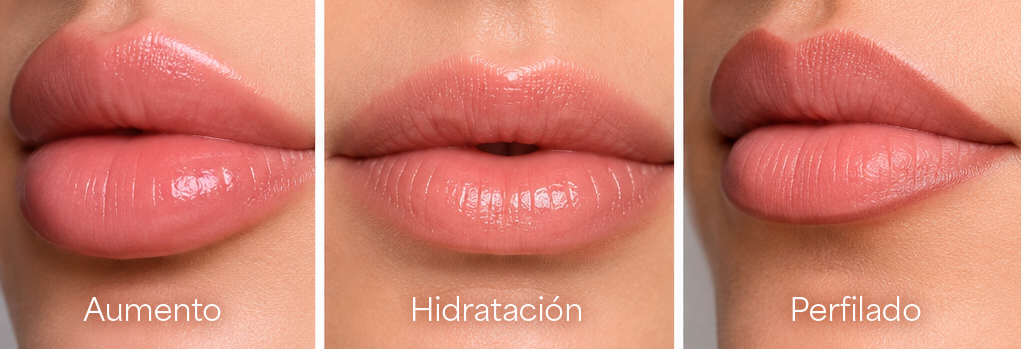
It aims to improve texture, elasticity, and the appearance of fine lines without creating a noticeable increase in volume. Soft, flexible hyaluronic acids with high tissue integration are preferred and applied in small amounts through micro-deposits.
Hyaluronic acid is hygroscopic: it attracts and retains water in the extracellular matrix. However, any injected material can create some degree of fullness, so a “zero volume” result cannot be guaranteed.
Lip Contouring
Its goal is to define structures such as Cupid’s bow, the vermilion border, and, when indicated, the philtral columns. It can help improve the contour and correct asymmetries without significantly increasing lip size.
Small deposits or precise linear threads of hyaluronic acid are generally used to provide support and definition while preserving a natural look during movement.[1,3]
Lip augmentation
It is indicated when the goal is to increase volume, height, or projection. The product is placed mainly in the body of the lip using linear, micro-deposit, fanning, or vertical techniques, depending on each patient’s characteristics.
For this goal, a hyaluronic acid filler with suitable projection and support is selected, while avoiding any compromise to the natural mobility and softness of the lip tissue.[1,2]
Results, duration, and aftercare
Results usually last between 6 and 12 months, although this can vary depending on the product, amount used, technique, metabolism, and lip movement.[2,4]
Temporary swelling, tenderness, or bruising may occur after the procedure. For the first 24 to 48 hours, avoid strenuous exercise, excessive heat, alcohol, and touching the area.
Severe or worsening pain, paleness, a mottled color pattern, vision changes, or neurological symptoms are not normal effects and require immediate medical evaluation.
In conclusion, hydrating, contouring, and increasing volume are not the same thing. These goals can be pursued independently or combined, always after a medical assessment that helps preserve facial proportion, function, and harmony.
References
1. Samizadeh S, Wu W. Anatomical-based diagnosis and filler injection techniques: lips and perioral area. Aesthetic Plast Surg. 2025.
2. Wollina U. Facial aesthetic injections in clinical practice: pretreatment and posttreatment consensus recommendations. J Cosmet Dermatol. 2020;19(11):2847-2853.
3. Surek CC, et al. A safe and effective lip augmentation method: the step-by-step Φ technique. Plast Reconstr Surg Glob Open. 2021;9(2):e3332.
4. Ehlinger-David A, et al. Prospective multicenter clinical trial evaluating hyaluronic acid filler for lip enhancement and perioral rejuvenation. J Cosmet Dermatol. 2023.