
How to choose the right approach in aesthetic medicine
Introduction
In aesthetic medicine, the question “filler or biostimulator?” should not be decided solely by the product’s brand name. Both approaches can be part of facial rejuvenation, but they pursue different goals. Dermal filler is mainly used to add volume, project or define structures, and correct certain contour concerns; a biostimulator aims to encourage a gradual biological response, particularly collagen production and remodeling. The recommendation should be tailored to the person’s anatomy, skin quality, degree of volume loss, expectations, specific product, and its authorized indication.
What Do We Mean by Filler?
Dermal fillers are injectable materials used to change the volume or appearance of tissues. Hyaluronic acid (HA) is one of the most widely used materials and can be formulated with different rheological properties to suit particular areas and clinical goals. Depending on the product, it may be used to restore volume, soften certain folds, define contours, or add projection. The FDA notes that most approved fillers are temporary and that their duration depends on the material and the specific product; certain HA fillers are reported to last approximately 6–12 months.
What is a biostimulator?
A collagen biostimulator is intended to trigger a tissue response that helps gradually improve skin quality and firmness. Materials used for this purpose include calcium hydroxyapatite (CaHA) and poly-L-lactic acid (PLLA). CaHA may provide some volumizing effect when used in a carrier-gel formulation, and it can also be used in diluted or hyperdiluted form with an emphasis on biostimulation. PLLA is a biodegradable polymer whose aesthetic effect is predominantly gradual and usually requires a series of sessions.
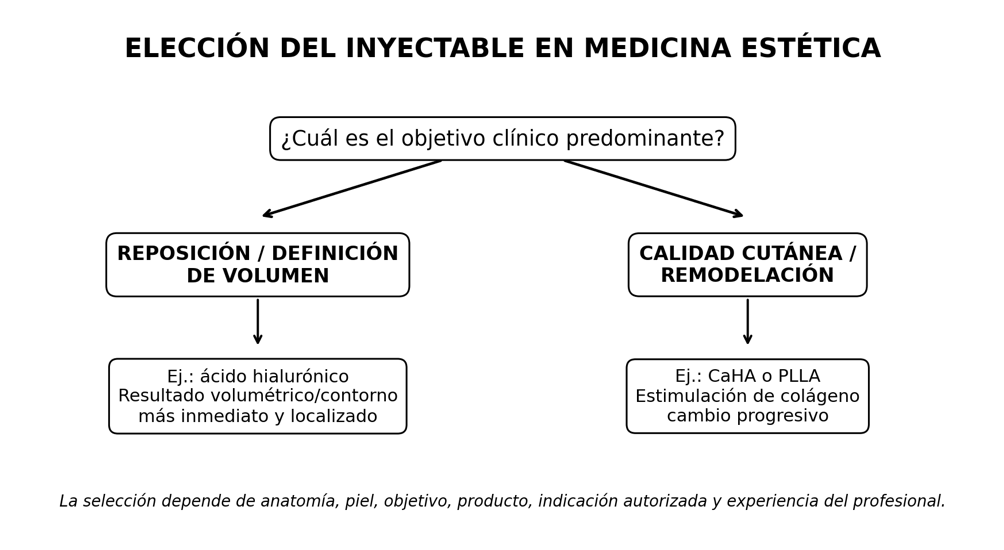
Figure 1. Conceptual diagram to guide the choice between volume replacement and biostimulation.
Filler vs. Biostimulator: Clinical Differences
| Appearance | Filler | Biostimulator |
| Main goal | Volume, projection, contour, or targeted correction. | Stimulate tissue remodeling and improve skin firmness and quality. |
| Examples | Hyaluronic acid; some products contain calcium hydroxyapatite (CaHA). | Diluted/hyperdiluted CaHA; PLLA. |
| When results begin | Usually visible from the procedure onward, depending on the product. | Gradual; depends on the biological response. |
| Result profile | More localized and easier to shape. | More gradual and dependent on tissue remodeling. |
| Planning | Anatomical plane, product properties, and goal. | Skin, laxity, area, product, and expected response. |
When Should You Consider One or the Other?
When there is a clearly defined loss of volume or the goal is anatomical projection, a filler may better meet that goal because it allows targeted tissue shaping. By contrast, when laxity, skin thinning, or a gradual decline in skin quality is the main concern, biostimulation may better align with the treatment goal. The two treatments are not mutually exclusive: for some patients, they may be combined or used in sequence, provided there is a clear indication and the characteristics and indications of each product are respected.
Safety Is Part of the Treatment
Choosing the material is only one part of the procedure. Facial injectables can cause local adverse events and, although uncommon, serious vascular complications. Expert consensus emphasizes patient selection, anatomical knowledge, injection technique, product selection, and preparation to recognize and manage complications. These procedures should therefore be performed by properly trained healthcare professionals using legitimate products in accordance with their authorized indications.
Conclusion
“Filler or biostimulator” is not a competition between two treatments, but rather two tools with different goals. Fillers are primarily intended to change volume and contour; biostimulators are intended to promote a gradual tissue response and improve certain skin characteristics. The clinical decision should start with the aesthetic diagnosis, not with the product available: first determine what the tissue needs, then select the appropriate material and technique. In selected patients, both approaches may be part of a comprehensive rejuvenation plan.
References
1. U.S. Food and Drug Administration (FDA). Dermal Fillers (Soft Tissue Fillers). FDA; information consulted in 2026.
2. U.S. Food and Drug Administration (FDA). What to Do and Not Do with Dermal Fillers for Wrinkles, Lips, and Other Areas.
3. Urdiales-Gálvez F, et al. Preventing the Complications Associated with the Use of Dermal Fillers in Facial Aesthetic Procedures: An Expert Group Consensus Report. Aesthetic Plast Surg. 2017;41:667–677. doi:10.1007/s00266-017-0798-y.
4. Goldie K, et al. Global Consensus Guidelines for the Injection of Diluted and Hyperdiluted Calcium Hydroxylapatite for Skin Tightening. Dermatol Surg. 2018. doi:10.1097/DSS.0000000000001685.
5. de Almeida AT, et al. Consensus Recommendations for the Use of Hyperdiluted Calcium Hydroxyapatite as a Face and Body Biostimulatory Agent. Plast Reconstr Surg Glob Open. 2019.
6. Haddad A, et al. Injectable Poly-L-Lactic Acid for Body Aesthetic Treatments: An International Consensus on Evidence Assessment and Practical Recommendations. Aesthetic Plast Surg. 2025;49:1507–1517. doi:10.1007/s00266-024-04499-9.
7. Cure et al. Optimizing Collagen Biostimulator Choice in LATAM: Expert Consensus on Patient Selection, Ethnic Skin Phenotypes, and Accessibility. J Cosmet Dermatol. 2025. doi:10.1111/jocd.70564.